

Personalised project shortlistGet detailed information →
Home / Greece Golden Visa Guide
Greece Golden Visa:The Complete 2026 Guide
Updated: 7 October 2026
NBBy Naci Erdem Berkan · Broker
Last updated: 7 October 2026. This guide is for general information only and is not legal or tax advice. Greek legislation changes frequently, so our lawyer re-confirms the current requirements before every transaction.
The Greece Golden Visa is one of the most popular ways for investors from around the world to obtain residence rights in the European Union. The reasons are simple: the investment goes directly into real estate, the value you invest stays with you as a title deed in your name, you are not required to live in Greece, and a single application covers your spouse, your children and the parents of both spouses. However, the Greek Golden Visa programme has changed fundamentally since 2024. The era of “a home anywhere for €250,000” is over; the investment amount is now split into three tiers depending on the region and the type of property.
On this page we explain Greece residency by investment not as a sales brochure but as a roadmap to help you decide: who can apply, how much you need to invest in which region, what the total cost will be, how many months the process takes, how renewal and citizenship work, and the most common mistakes. Alongside the figures, we note which information comes from official legislation and which comes from market practice.
€250,000Conversion of commercial property to residential use or restoration of a listed building
€400,000All of Greece outside the €800,000 areas, minimum 120 m²
€800,000Attica, Thessaloniki, Mykonos, Santorini and islands with more than 3,100 inhabitants
5 yearsRenewable residence permit, no minimum stay requirement
3 generationsSpouse, children under 21, parents of both spouses
7 yearsPath to a citizenship application through actual residence and other conditions
What is the Greece Golden Visa?
The Golden Visa is the popular name for Greece's “residence permit for investors” programme. It was launched in 2013, as Greece emerged from its economic crisis, to attract foreign capital into the real estate market. Today it operates under the investor provisions of the Migration Code (Law 5038/2023); the last major amendment was made by Law 5100/2024.
The logic is this: a citizen of a country outside the European Union and the European Economic Area makes an investment of one of the types listed in the law, at the required amount, and in return receives a renewable 5-year residence permit from Greece. The card gives you the right to travel visa-free within the Schengen Area, but it does not give you the right to live or work in any Schengen country you choose. Because this point is so often misunderstood, it is worth stating from the outset: the Golden Visa is a residence programme, not a citizenship programme.
Who is it right for?
- Investors who want to create a second base and a safety net for their family in the EU,
- Families planning for their children to study in Europe,
- Business people who no longer want to go through Schengen visa applications again and again,
- Those who want residence rights together with property appreciation and rental income.
Who is it not right for?
- People looking for a permit to work as employees in Greece: the card does not grant this automatically,
- Those planning to recover their investment through short-term (Airbnb-style) rental income: the new rules prohibit this,
- Those thinking of buying this year and selling within a few months: residence depends on keeping the investment.
What changed between 2024 and 2026?
The topic investors most often confuse online, or even misunderstand, is which rules still apply. The table below summarises the key milestones of recent years.
| Date | Change | What does it mean? |
|---|---|---|
| 2013 | The programme launched with a single €250,000 real estate threshold. | For years there was one threshold and one figure. |
| 2023 | Residence provisions were consolidated and reorganised in the Migration Code, Law 5038/2023. | The programme's legal framework moved to the new law. |
| 1 September 2024 | Law 5100/2024 introduced regional thresholds: €800,000 for Attica, Thessaloniki, Mykonos, Santorini and islands with more than 3,100 inhabitants; €400,000 for other areas. | The “€250,000 everywhere” era ended. |
| 2024 | The €250,000 threshold was kept only for converting commercial/office property to residential use and for restoring listed buildings. | Buying a ready-built home no longer falls under this threshold. |
| 2024 | Short-term rentals (sharing-economy platforms) were banned for new purchases; violations can lead to revocation of the permit and an administrative fine. | Yield plans must be based on long-term rentals. |
| February 2026 | Law 5275/2026 came into force: a €250,000 start-up investment route and the residence period starting from the date the card is issued, among other changes. | An alternative route was opened and a goal to speed up processing was announced. |
| September 2026 | The Prime Minister announced a plan to raise the property transfer tax for non-EU buyers from 3% to 15%; implementation is expected for 2027. | This is a plan; it should not be treated as final until it becomes law. We explain it in detail below. |
Why does the transfer tax plan matter? The current rate is around 3%. If the plan becomes law, the tax on a €500,000 purchase would rise from roughly €15,000 to €75,000. We still do not know the exact scope of the plan (whether Golden Visa holders will be exempt). So when deciding, it makes sense to treat the tax as a “risk that has not yet become law”, while also planning your purchase timeline accordingly.
Who can apply for the Greece Golden Visa?
The general requirements for the main applicant are:
- Not being an EU/EEA citizen,
- Being at least 18 years old,
- Having a clean criminal record and posing no risk to public security,
- Holding private health insurance valid throughout the application,
- Transferring the investment amount to Greece legally, by bank transfer, with a documented source of funds.
In practice, disclosure of the source of funds is decisive. Documenting sources such as salary, company dividends, property sales or inheritance is also required for banks' own compliance rules; being prepared on this point prevents delays in the transfer.
How are family members included?
One of the strongest features of the Golden Visa is its broad family coverage. With a single investment, the following relatives of the main applicant can be included in the same application without any additional investment:
- Spouse,
- Unmarried children under 21,
- The main applicant's mother and father,
- The spouse's mother and father.
A separate residence card is issued, and a separate fee paid, for each family member. Marriage and birth certificates are submitted with an apostille and a sworn translation. Because age limits and dependency conditions are regulated in detail, families with children approaching 21 in particular should plan the application without delay.

Investment options and regional thresholds
For the Golden Visa through real estate there are three main tiers today. Three things determine which tier you fall into: the region where the property is located, the nature of the property and the size of its main area.
| Tier | Which region / property? | Area requirement | Example areas |
|---|---|---|---|
| €800,000 | Attica region, Thessaloniki regional unit, Mykonos, Santorini and islands with more than 3,100 inhabitants | Main area at least 120 m², single property | Athens and the coastline (Glyfada, Vouliagmeni, Voula, Kifisia), Thessaloniki regional unit, Mykonos, Santorini and large islands with more than 3,100 inhabitants such as Crete, Rhodes and Corfu (the tier must be confirmed project by project) |
| €400,000 | All other parts of Greece outside the €800,000 areas | Main area at least 120 m², single property | Mainland regions such as the Peloponnese, Halkidiki, Kavala, Volos and Thessaly, plus small islands with fewer than 3,100 inhabitants |
| €250,000 | Conversion of commercial/office property to residential use or restoration of a listed historic building | No minimum square metres | Anywhere in Greece (project-based) |
The thresholds are given according to current legislation. Because regional boundaries and island population figures are based on the official census, you should have the tier of a property confirmed in writing before choosing it. Indeed, even online publications contain differing interpretations (for example about the tier of large islands such as Crete); this is why we clarify the tier of every listing with our lawyer's approval.
The €800,000 tier
This applies in high-demand areas. Central Athens and the southern coastline, Thessaloniki and the two famous islands fall into this group. Investors in this tier usually target an expensive, premium portfolio: a villa, a large apartment or a multi-unit building. Because of the single-property rule, it is not possible to combine two apartments to reach €800,000.
The €400,000 tier
This is the main entry point for investors with a lower budget. If you buy a property of 120 m² or more outside Athens and Thessaloniki, for example in Halkidiki, Kavala or the Peloponnese, you can qualify for this tier. The point to watch is that 120 m² means “main area”: auxiliary spaces such as storage rooms and parking are not included in this calculation (their value may count towards the investment amount when bought in the same deed).
€250,000: conversion and restoration
This tier is part of Greece's policy to increase its housing stock and comes with three conditions:
- Conversion: An engineer's certificate showing that a commercial or office building has been converted to residential use must be ready before the application. The converted unit cannot be used as a company's headquarters or branch.
- Restoration: A listed building is purchased and the restoration must be completed before the first 5-year renewal. The property cannot be sold until the restoration is finished; violations can lead to revocation of the permit and a high administrative fine.
- Project selection: In this tier, the most critical point is being able to document that the conversion has truly been completed and that all permits are in place.
This tier looks attractive in terms of investment amount, but it depends much more on the quality and legal status of the project. That is why entering a project with missing documents to save a small amount can be the most expensive mistake of the whole process.
The €250,000 start-up route
Law 5275/2026 also added a route outside real estate: a €250,000 investment in a technology start-up registered with Elevate Greece. According to published summaries, the equity stake is capped at 33% and the start-up is expected to create at least two full-time jobs in its first years. As this route is not the focus of this guide we do not go into detail; we explain the legal framework in a separate meeting to investors who want to learn more.
Other non-real-estate options
Greek legislation also lists financial options such as certain shares, bonds, investment funds and tourist accommodation leases. Each has its own amount and duration requirements, and these options are generally aimed at investors working with liquid capital. Because we keep our portfolio focused on Golden Visa approved real estate, this guide concentrates on the real estate route.
Property requirements: what to look out for
Choosing the right region is not enough. The property itself must also meet certain criteria:
- Single-property rule. The threshold applies to the purchase value of a single property. You cannot combine two apartments to reach the threshold. Storage and parking bought in the same deed, however, may be included in the investment value as auxiliary spaces.
- Full ownership. The investment must be made through full ownership held by you or your spouse. In the case of shared or joint ownership, each co-owner's share must reach the threshold; you should ask a lawyer about this before buying.
- Legal status. The title must be clean, free of mortgages and liens, and building permits and occupancy status must be documented.
- Payment. The price must be transferred to the seller's bank account in Greece through legal banking channels; cash payment is not accepted. The notarial deed states the price, the proof of payment and the main area in square metres.
- Land registry. The property must be registered in your name at the land registry (cadastre), or the registration application must be documented.
- Off-plan property. Properties under construction can be accepted in projects that have a building permit and meet certain conditions. The delivery date and how much of the price has been paid affect the timing of the application.
How Neb Collection works: For every property in our portfolio, the regional tier, main area, title and permit status are checked in writing before sale. Properties that are not eligible for the Golden Visa are not listed.
Apartment, detached house or land: which makes sense?
A question investors often ask is “Can I get a Golden Visa by buying land?” The short answer: land on its own is not enough; the legislation targets built property or projects with a building permit and requires the 120 m² main area criterion. So “land that meets the regional threshold and has a building permit” may form the basis of an application, but not every plot qualifies. Each plot needs a separate assessment.
| Property type | Advantages | Points to watch |
|---|---|---|
| Apartment | Easy to manage and rent out; liquid in Athens and Thessaloniki; many options in new projects. | Prices are high in the €800,000 areas; the 120 m² requirement narrows the choice of apartments. |
| Detached house / villa | Easily meets the 120 m² requirement; options with gardens and sea views exist in the €400,000 tier. | Maintenance costs and a narrower rental market; location determines how easy it is to resell. |
| Building / multi-unit property | Rental income can be diversified; common in €250,000 conversion projects. | How the “single property” rule is interpreted and the permit documents must be verified in advance. |
| Land | Entry cost can be low; opportunity to create value through construction. | Building permit, zoning status and the 120 m² main area criterion must be met; construction time can delay the residence timeline. |
Rental and use rules
You can use your investment property yourself, let it on a long-term basis or keep it empty. Knowing what you cannot do under the new rules is just as important:
- Short-term rentals are prohibited. Property bought under the Golden Visa after 2024 cannot be rented on sharing-economy platforms such as Airbnb or Booking.com. Violations can lead to revocation of the permit and an administrative fine (around €50,000 according to sources).
- Long-term rentals are allowed. Written lease agreements in line with local legislation can be made, and the income is declared for tax.
- Subletting is not allowed. The tenant cannot sublet the property to a third party.
- Exception for the old rules. Buyers who purchased before 2024 may fall under a different legal regime; the rule is not applied retroactively.
- In €250,000 projects rental flexibility varies by project; the legal conditions of each project should be read separately.
The practical takeaway: base your yield calculation on long-term rentals, not daily rentals. In Athens and Thessaloniki, rental demand from students, corporate employees and foreign professionals can deliver a reasonable yield on long-term lets; however, this yield is not “guaranteed”.
Which tier suits you?
Share your budget, target region and family situation, and let's narrow down suitable Golden Visa approved properties together in a free initial consultation.
Golden Visa Approved ProjectsMessage us on WhatsApp
Total cost: what is added on top of the investment amount?
The most common mistake when planning a Golden Visa budget is looking only at the property price. On top of the price there are government fees, taxes, notary and land registry costs, legal services and health insurance. The table below shows the official fees as announced and the estimated ranges seen in the market. Figures are approximate and may change.
| Item | Amount / rate | Note |
|---|---|---|
| Main applicant government fee | €2,000 | Paid on application; also charged on renewal. |
| Adult family member fee | Approximately €150 per person | Reportedly no fee is charged for children under 18. |
| Residence card fee | Approximately €16 per person | Paid at the biometrics appointment. |
| Property transfer tax | Approximately 3% | A rise to 15% for non-EU buyers is planned but not yet law. |
| VAT (new builds) | Not applicable in conversion projects | A temporary suspension of VAT on new home sales until the end of 2026 is reported; confirm project by project. |
| Notary and lawyer | Notary approx. 1 - 1.5%; lawyer €2,500 - 6,000 | The lawyer's fee depends on the scope of the transaction. |
| Land registry and cadastre costs | Approximately €500 - 1,000 and above | Varies with property value and region. |
| Real estate agent commission | Usually 2% + VAT | May vary for new project sales. |
| Private health insurance | Variable annual cost per person | Priced according to age and coverage. |
| Annual property tax (ENFIA) | Depends on property value and area | A property tax paid every year. |
As a practical rule of thumb, it makes sense to add an estimated 7 to 12 percent in purchase costs on top of the property price. This is an estimate; the actual amount depends on the type of property, the commission structure and your tax situation. Before you decide to buy, you can ask us for a written cost summary covering every item.

Greece Golden Visa application process, step by step
In theory the process has three main parts: buying the property, submitting the residence application and collecting the card. In practice, each part has its own critical points.
1
Property selection and preliminary review. A shortlist is drawn up according to your budget and goals. The regional tier, main area, title, mortgage and permit status of each property are reviewed. This stage usually takes 1 to 3 weeks.
2
Tax number and power of attorney. A Greek tax number (AFM) is obtained; if the transaction is handled remotely, a power of attorney is prepared for the lawyer.
3
Bank account. A Greek bank account is opened, from which the investment will be paid. The bank's compliance (KYC) process requires source-of-funds documents.
4
Legal due diligence and contract. The lawyer checks the title history, debts and permit documents; a preliminary contract is signed.
5
Fund transfer and title transfer. The price is wired to the seller's account, the sale contract is signed before a notary and registration at the land registry is started.
6
Health insurance and application file. Insurance is arranged for all applicants; the documents are completed and the online application is submitted.
7
Biometrics appointment and card. Fingerprints and a photo are taken. After the decision, the card is printed and delivered.
How long does it take?
The law sets a short decision period for a complete file (about two months), but the actual time can be longer depending on the workload of the migration offices. At the beginning of 2026 it was reported that only a portion of applications were concluded within six months; the aim of Law 5275/2026 is to reduce the time to 4 to 6 months. So even if “everything goes smoothly”, it is sensible to plan for a range of six to nine months.
| Stage | Estimated time | Note |
|---|---|---|
| Property selection and preliminary review | 1 - 3 weeks | Shorter if budget and details are clear. |
| Tax number, bank, power of attorney | 1 - 3 weeks | Depends on document preparation. |
| Contract and title transfer | 2 - 6 weeks | Longer if permits or title documents are missing. |
| Online application and Blue Certificate | 1 - 3 weeks | The temporary certificate is issued after the application. |
| Biometrics, decision and card | 2 - 6 months | This is the most variable stage. |
What is the Blue Certificate?
The temporary document issued after the application (the certificate of application) is known as the “Blue Certificate”. It shows that your application has been accepted and helps you enter and leave Greece while the process continues; the current practice of the authorities regarding travel within Schengen should be confirmed.
Required documents
Every application file can differ from person to person; the list below summarises the most frequently requested documents:
- Copy of a valid passport and biometric photos,
- Notarised sale contract: price, proof of payment and main area in square metres,
- Land registry registration certificate or registration application,
- Greek tax number and E9 property declaration,
- Private health insurance contract,
- Electronic payment receipt for the government fees,
- Clean criminal record certificate (with an apostille and sworn translation where required),
- For family members: marriage certificate, birth certificates and the related translations.
An important detail: documents for children and spouses from non-EU countries usually require an apostille and a sworn translation; translation and apostille times can add a few weeks to the overall process. Documents also have limited validity periods.
Health insurance
Continuous private health insurance is mandatory for every applicant. The reported minimum coverage is €10,000 per year for inpatient treatment, €1,500 for outpatient treatment and €15,000 for disability caused by an accident; the co-payment can be at most 20%. The policy is issued through insurers or authorised entities valid in Greece. Uninterrupted coverage is required again at every renewal.
Remote purchase and power of attorney
It is possible to buy and apply without ever travelling to Greece. The logic is as follows: with a notarised power of attorney you give your lawyer the authority to obtain a tax number, open a bank account, handle the title transfer and submit the application. Preparing the power of attorney in your home country and approval steps such as the apostille are carried out under the lawyer's supervision. For the biometrics appointment, however, remote applicants must travel to Greece within a certain period (12 months according to reported sources) to give fingerprints and a photo. In other words, everything else can be handled remotely, but you need to travel at least once.
Schengen and travel
Once you have the residence card, you can stay visa-free in Schengen countries for up to 90 days in any 180-day period. Not having to live in Greece, and not having to make Greece your “main base”, is one of the most convenient aspects of the card. Beyond that:
- The card does not give the right to settle or work in other Schengen countries,
- Separate visa requirements for entering certain countries (for example the USA or the UK) still apply,
- You should track the expiry dates of your passport and your card together.
Work and income
The Golden Visa does not automatically allow salaried employment in Greece. However, it is possible to manage your own business or company, earn rental income and run your company abroad. A separate work permit is required for salaried employment.
Renewing the residence card
The card is issued for 5 years and is renewed every 5 years as long as you keep the investment. Renewal does not require a new investment or additional conditions, but you must show that the following points are continuously met:
- Full ownership of the property must remain with you or your spouse,
- Valid health insurance must continue,
- There must be no obstacle in terms of criminal record and public order,
- Renewal fees must be paid and documents updated,
- In €250,000 restoration projects, the restoration must be completed before the first renewal.
It is reported that with Law 5275/2026 the residence period now starts from the date the card is issued rather than the application date. This aims to protect the card's effective validity when processing times are long. Always track your renewal date by the expiry date printed on your card and start the renewal a few months before it expires.
What happens if I sell the property?
Residence depends on keeping the investment. Selling the property and replacing it with another qualifying investment (in the same or a higher tier) may be possible in some cases; however, the transition must be reported to the authorities and handled correctly from a legal standpoint. Always consult a lawyer before deciding to sell; the wrong timing can affect your residence and your family members' rights.

Taxes: what do you pay in Greece?
The Golden Visa does not automatically make you a Greek tax resident. Your tax status is determined by the number of days you actually spend in Greece each year and where your centre of life is. The headings below are a general framework; for a personal calculation you should speak with a tax adviser.
1) When buying the property
There is transfer tax (around 3%) and VAT on new builds. A plan to raise the transfer tax to 15% for non-EU buyers has been announced; however, it should not be treated as final until it becomes law.
2) After you own it
An annual property tax (ENFIA) is paid. The amount depends on the property's location, area and value. Running costs and maintenance expenses are calculated separately.
3) Rental income
Rental income from a property in Greece is taxed in Greece. A progressive scale applies; in the lower income brackets the rate starts at 15% and rises as income increases. An annual tax return is mandatory. If you are a tax resident in another country, you may also have to declare the rental income there; double taxation agreements between Greece and many countries ease this situation.
4) If you become a Greek tax resident
If you stay in Greece for more than 183 days a year or move your centre of life there, tax on your worldwide income may come into play. At this point Greece's special tax regimes may apply:
- Non-dom regime: A regime reported to provide a flat tax of €100,000 per year on income earned outside Greece (with an additional amount per family member). It is aimed at people who have not been Greek tax residents for most of the preceding years and who invest above a certain amount in Greece. The regime is limited in duration and conditions and requires an application separate from the Golden Visa.
- Pensioner regime: There is an option, subject to certain conditions, that applies a flat 7% tax rate to foreign pension income.
Important: This section is not investment or tax advice. Residency, double taxation and reporting obligations in your home country differ from person to person; get up-to-date advice from a tax adviser before making decisions.

Is there a path to Greek citizenship?
The short answer: the Golden Visa does not give you citizenship. However, if you meet the legal requirements, you can work towards citizenship through a separate application. The general framework of Greek citizenship legislation can be summarised as follows:
- Seven years of continuous, legal and actual residence before the application date,
- Being physically present in Greece for the minimum number of days set each year (simply holding the card is not enough),
- A certain level of Greek language proficiency (reported as B1) and an exam on society and culture,
- Having fulfilled your tax and other obligations,
- A clean record and integration requirements.
So the Golden Visa should be seen not as a “shortcut” but as the first step of a long-term plan. If citizenship is your goal, you need to be genuinely ready to live in Greece and to document your days of residence throughout this period. These requirements may change over time.
The 10 most common mistakes
- Choosing a property without confirming the tier. If a property bought on the assumption that “the tier is the same” falls below the threshold, the residence application may be rejected.
- Confusing the 120 m² rule with gross area. What is required is the net main area; balconies and storage are calculated differently.
- Combining two apartments. There is a single-property rule.
- Including short-term rentals in the yield plan. They are banned and the penalty is high.
- Preparing source-of-funds documents late. Banks and the authorities ask for documents; a document searched for at the last minute can delay the process by months.
- Leaving insurance to the last minute. The policy is part of the application file and has coverage criteria.
- Proceeding without a lawyer, or only with the seller's lawyer. The buyer should have their own independent lawyer.
- Not calculating the total cost. Taxes, fees and commissions can increase the budget by 7-12 percent.
- Missing the renewal date. Add the expiry date shown on the card to your investment calendar.
- Expecting an unrealistic timeline. Promises of “the card in 2 months” are misleading; plan on six to nine months.
Sample cost scenarios
To make the figures concrete, we calculated one example for each of the three tiers. Assumptions: main applicant, spouse and two children under 18 (four people); transfer tax 3%; notary 1%; current estimated land registry/cadastre costs; average lawyer fees for small, medium and large transactions; commission 2% + 24% VAT. Health insurance, new-build VAT, ENFIA and furnishing are not included.
| Investment | Government fees (4 people) | Transfer tax 3% | Notary and land registry | Lawyer | Commission | Total additional cost |
|---|---|---|---|---|---|---|
| €250,000 | €2,214 | €7,500 | €3,250 | €3,500 | €6,200 | €22,664 (9.1%) |
| €400,000 | €2,214 | €12,000 | €5,000 | €4,000 | €9,920 | €33,134 (8.3%) |
| €800,000 | €2,214 | €24,000 | €9,500 | €6,000 | €19,840 | €61,554 (7.7%) |
As you can see, fixed items (fees, lawyer) push up the overall percentage on a smaller investment, while percentage-based items (tax, notary, commission) increase the amount on a larger investment. In all three cases the additional cost stays between roughly 7 and 9 percent; when VAT and other items are added, this can rise to 12 percent.
What if the transfer tax becomes 15%?
If the plan for non-EU buyers becomes law, only the tax item changes as follows:
| Investment | Current tax (3%) | Tax under the plan (15%) | Difference |
|---|---|---|---|
| €250,000 | €7,500 | €37,500 | +€30,000 |
| €400,000 | €12,000 | €60,000 | +€48,000 |
| €800,000 | €24,000 | €120,000 | +€96,000 |
This difference is the most concrete factor affecting purchase timing; however, until the scope of the plan and any exemption for Golden Visa holders become clear, we recommend not rushing into a decision but managing your timeline consciously.
Area notes from our portfolio
The information below is compiled from the Golden Visa approved projects published on our website as of October 2026. It is not a market index but a summary of our own portfolio, and it is updated as listings change.
| Area | Listings in portfolio | Typical threshold | Suitable for |
|---|---|---|---|
| Athens | 36 listings | Most listings in our portfolio are €250,000 conversion projects; price range €250,000 - 360,000 | Those wanting EU residence on a lower budget with long-term rental potential |
| Thessaloniki | 9 listings | €250,000 - 400,000 | Those looking for student demand and corporate rental potential |
| Halkidiki | 1 listing | €400,000 | Those wanting a holiday or second home and a seaside lifestyle |
| Other (Kavala, Crete, etc.) | 6 listings | €250,000 - 600,000 | Investors focused on environment and quality of life |
The predominance of €250,000 projects in our portfolio is no coincidence: with the lowest starting budget, this is the tier with the highest demand. However, it is also the tier most dependent on project quality and complete documentation; this is why we check the conversion documents and permits for every project before sale.
A 12-question checklist before you buy
- Which tier is the property in, and who confirmed this in writing?
- How many m² of main area are stated in the title and the notarial deed?
- Is there a mortgage, lien or third-party right on the title?
- Are the building permit and (if any) conversion documents complete?
- If it is a €250,000 project, is the engineer's conversion certificate ready before the application?
- When is the delivery date, and what happens in case of delay?
- Are VAT, transfer tax and other taxes included in the price?
- Are promises such as a rental guarantee written into the contract, or only in the advertising?
- Has the impact of the short-term rental ban on the owner been explained?
- Is the lawyer working for me or for the seller?
- Are my source-of-funds documents in the format the bank requires?
- Are the children's ages and family documents compatible with the application timing?
Notes for international investors
Investors from Turkey, the Middle East, China and many other countries outside the EU are among the most active applicants for the Greece Golden Visa. The reasons are clear: proximity, short flights to Athens and Thessaloniki, the difficulty of obtaining Schengen visas and a gateway to Europe for children's education. Still, there are a few practical points when starting the process from abroad:
- Money transfer: The price must be transferred through legal banking channels with a documented source. Check in advance the documents your bank requires and your country's current foreign exchange rules for transfers abroad.
- Documents: Apostilles and sworn translations of marriage, birth and criminal record certificates add weeks to your timeline. Prepare them in parallel with choosing the property.
- Power of attorney: The apostille and Greek translation of a power of attorney issued by a notary in your home country are checked by your lawyer.
- Tax: If you are a tax resident in your home country, clarify with your tax adviser how your Greek rental income and the property are to be declared there. A double taxation agreement does not automatically solve every question.
- Language: Greek and English translations of documents are needed throughout the process. We provide correspondence and process management in English and Turkish.
What about other countries' programmes?
Some “residence through real estate” programmes that were once popular in Europe have now closed or removed the real estate option. For example, Spain's programme ended in 2025; Portugal closed its real estate route in 2023. As a result, Greece remains open as one of the few options that still offer EU residence directly through real estate. However, this advantage depends on how the rules evolve, so it is important to check the current legislation before deciding.

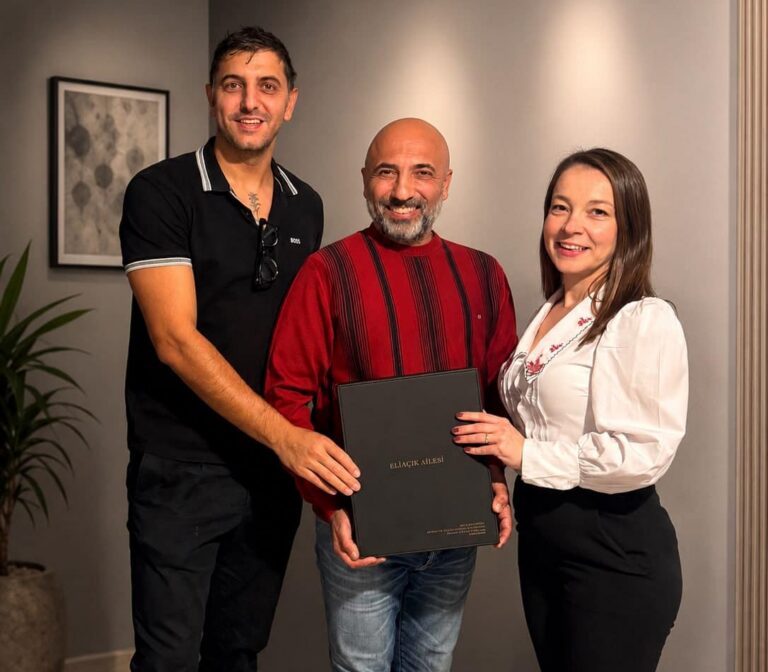

Neb Collection clients at handover
Working with Neb Collection
At Neb Collection we select and present apartment, house and land projects in Greece that are eligible for the Golden Visa. Our name stands for a curated portfolio: we assess every project on location, investment potential, quality of life and Golden Visa eligibility, and present only those that pass these criteria.
- Independent legal review: Title, mortgages, permits and the regional tier are checked in writing before purchase.
- End-to-end process management: From the tax number to the bank account, from the title deed to the residence application, every step is tracked from one place.
- Remote purchase support: Transactions can be completed with a power of attorney without coming to Greece.
- Transparent costs: All items beyond the property price are shared in writing before the contract.
You can reach the live list of our portfolio on the Golden Visa approved projects page and filter the options in Athens, Thessaloniki and other areas by region.
Free initial consultation
Share your budget and family situation, and let's work out the right tier and projects for you together.
Fill in the formWhatsAppGreece Golden Visa: frequently asked questions
What is the minimum investment for the Greece Golden Visa?
The minimum amount in real estate is €250,000; however, this amount applies only to converting commercial property to residential use or restoring a listed building. For ready-built homes the threshold is €400,000 or €800,000 depending on the region.
Which areas does the €800,000 threshold cover?
Under the legislation, the Attica region, the Thessaloniki regional unit, Mykonos, Santorini and islands with more than 3,100 inhabitants are in this tier. You should have the tier of a property confirmed in writing before choosing it.
Is there a minimum size for the €400,000 threshold?
Yes. In both the €400,000 and €800,000 tiers, the main area of the single property must be at least 120 m². There is no minimum on the €250,000 conversion and restoration route.
Can I buy two apartments to reach the threshold?
No. The rule works on the value of a single property; the total of several properties does not meet the threshold.
Can I get a Golden Visa by buying land?
Land on its own is not enough. A project with a building permit that meets the 120 m² main area requirement may qualify; every plot must be assessed separately.
How long is the card valid and how is it renewed?
The card is valid for 5 years. It is renewed every 5 years as long as you keep the investment and the other conditions continue; no additional investment or language requirement applies.
Do I have to live in Greece?
No. There is no minimum stay requirement. However, if you aim for citizenship, actual residence requirements apply separately.
Which family members are covered?
Spouse, unmarried children under 21, the main applicant's mother and father, and the spouse's mother and father. A separate card and fee are required for each.
Can I work in Greece with a Golden Visa?
The card does not automatically allow salaried employment. You can run your own business and earn rental income.
Can I rent the property on Airbnb?
No. For purchases after 2024, short-term rental platforms are prohibited, and violations can lead to revocation of the permit and a fine. Long-term rentals are allowed.
How long does the process take?
The legal target is short; however, in practice it is more realistic to plan for six to nine months. The process depends on document preparation and the authorities' workload.
What is the total cost?
Tax, notary, land registry, lawyer, commission and government fees are added to the property price. An estimated additional cost of 7-12 percent should be planned; the main applicant fee is €2,000.
Will the transfer tax rise to 15%?
A plan to raise it from 3% to 15% for non-EU buyers has been announced and is expected for 2027. The plan has not become law, and it is not yet clear whether Golden Visa holders will be exempt.
Can I buy with a mortgage (bank loan)?
You must document the legal source of the investment amount, and loan options for foreign buyers are limited. Clarify this in advance with your lawyer and the bank.
Can I complete the process with a power of attorney without travelling to Greece?
The purchase and application can be done remotely. However, you need to travel to Greece once for biometric data (fingerprints and photo).
Is health insurance mandatory?
Yes. Continuous private health insurance is required for all applicants, and there are minimum coverage criteria.
Are there limits when travelling in Schengen with a Golden Visa?
You can stay within Schengen for up to 90 days in any 180-day period; the card does not give the right to settle in another country.
Is it possible to obtain citizenship?
The Golden Visa does not grant citizenship. Those who meet the requirements of seven years of actual and legal residence, language and integration can apply for citizenship; the requirements may change over time.
What happens to my residence if I sell the property?
Residence depends on keeping the investment. Consult a lawyer before selling or exchanging; the wrong timing can affect your residence and your family members.
What services does Neb Collection provide?
We provide Golden Visa approved property selection, legal due diligence, tax number and bank account support, remote purchase, and process management for the title transfer and residence application.
Contact us
Fill in the form and Naci Erdem Berkan and his team will get back to you.
Free consultation
Get a personal Golden Visa project recommendation
Leave your details and our team will share the projects that fit your budget and goals.
- Legal pre-check included
- Options that fit your budget
- Reply within 24 hours
Thank you!We received your form and will contact you shortly.
Sources and notes
This guide was prepared by reviewing the publicly available sources and legislative summaries below. As sources sometimes contain differing interpretations, the final assessment for every property and application is made by our lawyer according to current legislation.
- Greek Migration Code, Law 5038/2023, and amending Law 5100/2024 (Government Gazette of Greece)
- Law 5275/2026 (start-up route and residence period provisions), as reported in sources
- IBA: The Greek Golden Visa after the 2024-2026 overhaul
- Global Citizen Solutions: Greece Golden Visa new rules
- Digicare: Golden Visa Greece step by step
- Para Dergi: Tax shock for Greece Golden Visa investors (transfer tax plan, in Turkish)
- MFY Legal: Greece Golden Visa legal guide (in Turkish)
This page is not legal, financial or investment advice. Figures and rules may change.


